Organic Batteries
- Home
- »
- Organic Batteries
Organic Batteries
Our research is directed toward the development of organic electrode materials for advanced battery systems, with the goal of achieving high energy density, high capacity, and ultra-stable electrochemical performance. Organic batteries offer significant advantages, including structural versatility, lightweight characteristics, environmental sustainability, and potential cost-effectiveness, making them attractive for future energy storage technologies.
We focus on the design of redox-active organic molecules and polymers for both cathode and anode applications, particularly carbonyl-based compounds, conjugated systems, and framework materials. Through molecular design, functionalization, and composite engineering, we aim to enhance electronic conductivity, redox activity, and structural robustness. We also emphasize electrolyte and interface engineering to improve ion transport and cycling stability, while mitigating challenges such as material dissolution and capacity fading.
.
Organic batteries
Exploring redox-active molecules and polymers as versatile materials for rechargeable batteries.
Our approach
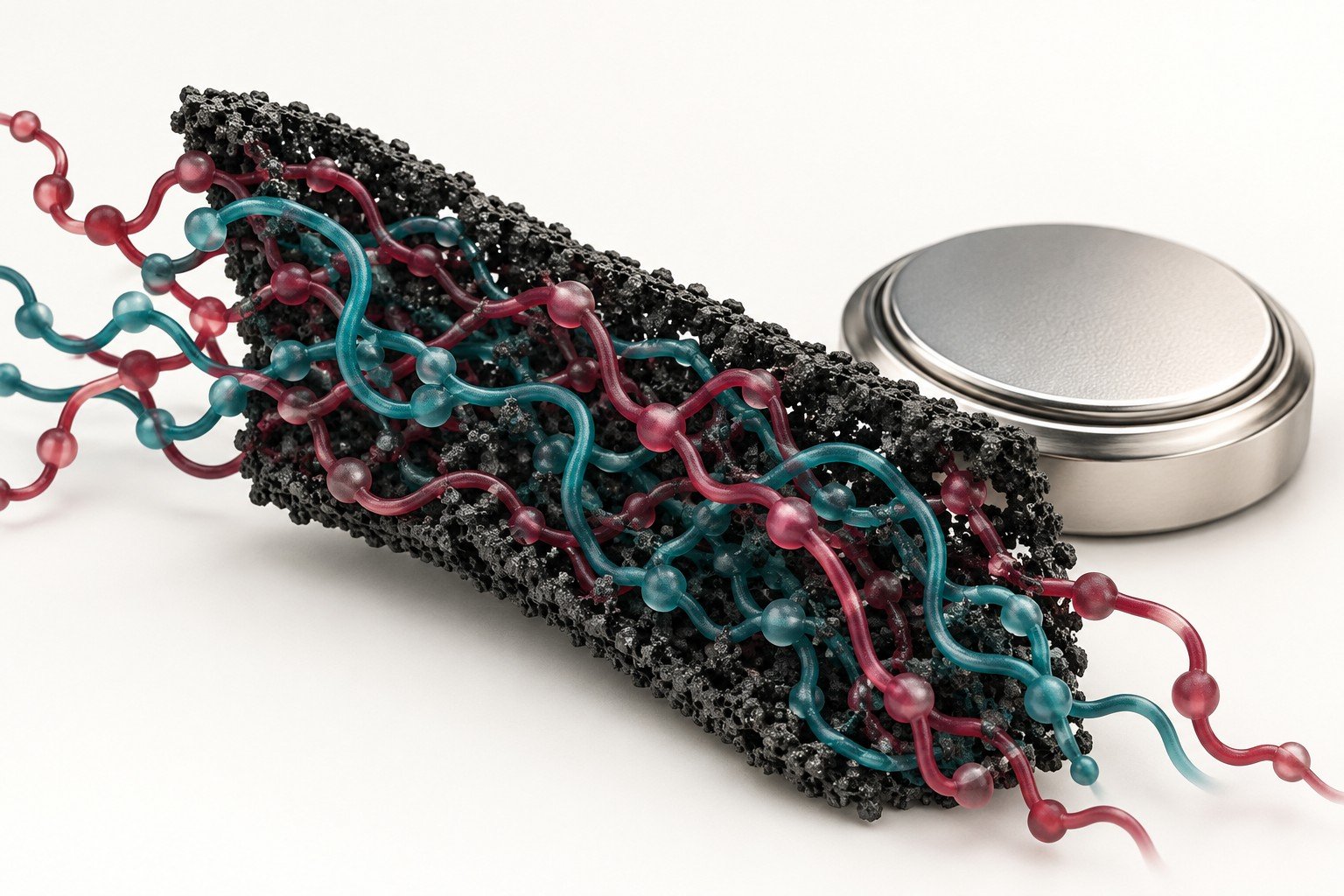
Our research uses carbonyl-containing molecules, conjugated systems and organic frameworks to examine how molecular structure influences electrochemical storage.
Molecular design
Chemical functionality and molecular architecture provide ways to tune redox behaviour and ion interactions.
Conductive composites
Integrating organic materials with conductive components helps address electronic transport limitations.
Electrolytes and interfaces
We examine dissolution, capacity loss and interfacial compatibility to improve the durability of organic electrodes.
What we aim to achieve
Develop durable organic electrodes by combining molecular versatility with thoughtful composite and interface design.