Electrocatalysis

  1. Home
  2. »
  3. Electrocatalyst Converter

Electrocatalysis

Our research is directed toward the development of advanced electrocatalysts for sustainable energy conversion technologies, with particular emphasis on water electrolysis and small-molecule electrochemical transformations. We investigate key electrochemical reactions such as the Hydrogen Evolution Reaction (HER), Oxygen Evolution Reaction (OER), and Nitrogen Reduction Reaction (NRR) for clean fuel generation and environmentally sustainable chemical production. We focus on the rational design of transition metal compounds, heterostructures, defect-engineered materials, doped carbon systems, and hybrid nanomaterials to achieve high catalytic activity, fast charge-transfer kinetics, and excellent electrochemical stability. Through electronic structure modulation, interface engineering, and nanostructure optimization, we aim to enhance catalytic efficiency and improve reaction selectivity.

Electrocatalysis

Engineering catalytic materials and interfaces for energy conversion and sustainable chemical transformations.
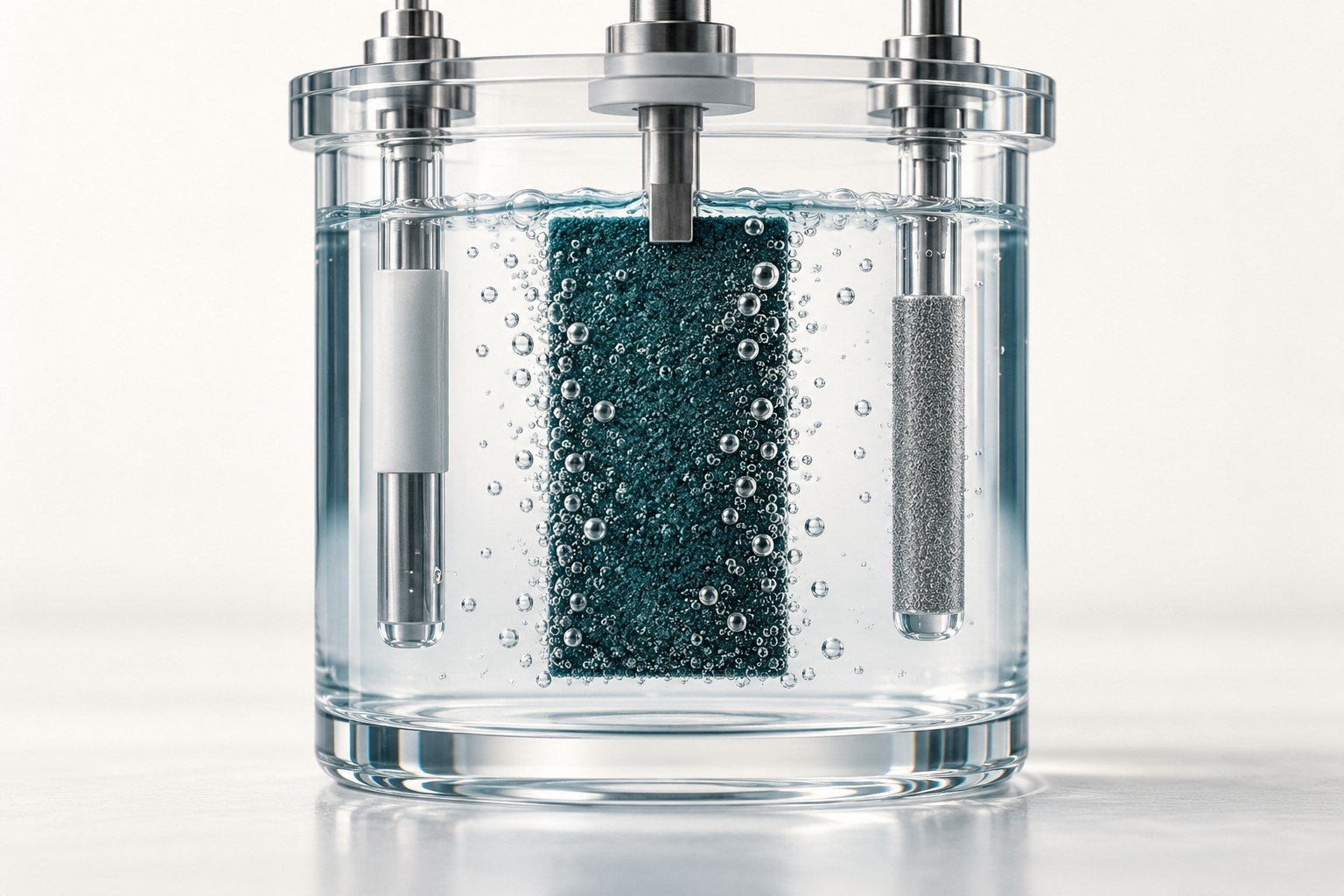
Conceptual illustration of electrocatalysis
Research direction

Our approach

Our work investigates reactions involving water and small molecules, including hydrogen evolution, oxygen evolution and nitrogen reduction.

01

Catalyst materials

Transition-metal compounds, heterostructures, doped carbons and hybrid nanomaterials provide platforms for catalytic design.

02

Active-site engineering

Defects, electronic structure and interfacial interactions help us investigate activity and charge transfer.

03

Reaction performance

We study stability and selectivity alongside electrochemical response to connect catalyst structure with reaction behaviour.

What we aim to achieve

Understand structure–activity relationships and use them to guide efficient, durable electrocatalyst design.